WINDHOEK, Dec. 17– Namibia on Tuesday revealed plans to strengthen governance, combat illegal fishing and promote sustainable use of marine resources in a bid to rebuild fish stocks and increase the sector’s contribution to the economy.
Minister of Agriculture, Fisheries, Water and Land Reform Inge Zaamwani said the government would introduce a fisheries scorecard in 2026, an objective system to measure compliance, employment creation, local procurement and governance in the fishing industry.
Speaking at an industry meeting in the southern coastal town of Luderitz, Zaamwani said that the reforms align with Namibia‘s Sixth National Development Plan, which aims to increase the fisheries sector’s contribution to gross domestic product from 10.4 billion Namibian dollars (about 619 million U.S. dollars) to 10.7 billion Namibian dollars by 2030.
She stressed that rebuilding fish stocks to maximum sustainable yield remains a non-negotiable priority, warning that over-exploitation would threaten jobs, coastal communities and long-term economic returns. According to Zaamwani, annual scientific stock assessments show that some key species remain under pressure, requiring continued caution and strict adherence to science-based management measures.
The government is intensifying by-catch controls, enhancing maritime surveillance and moving toward ratifying the World Trade Organization Fisheries Protocol to strengthen international cooperation against illegal, unreported and unregulated fishing, she said.
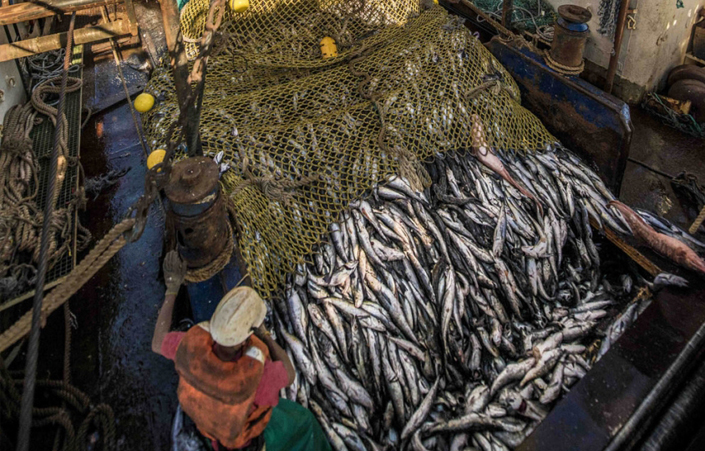
The minister noted that pilchard stocks are showing early signs of recovery, which has allowed authorities to approve a precautionary total allowable catch for the 2025 fishing season, subject to strict monitoring.
She also called on industry players to invest in aquaculture and mariculture, describing them as strategic sectors that could support food security, job creation and economic growth while easing pressure on wild fish stocks.
Namibia‘s fishing industry is a major economic contributor, typically accounting for around 3 to 4 percent of GDP and roughly 20 percent of the country’s export earnings, with about 90 percent of the catch exported. (Xinhua)