By John K WaDisho
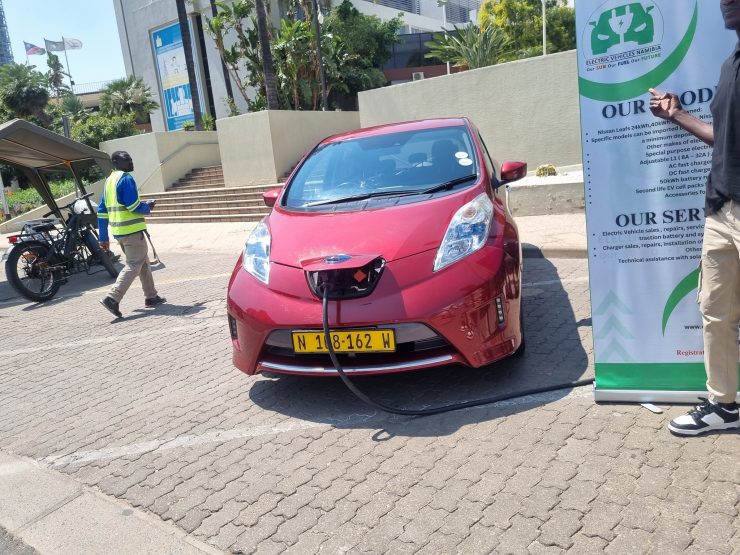
WINDHOEK, 16 Sept — The City of Windhoek has officially launched its first public electric vehicle (EV) charging station, marking a significant milestone in Namibia’s transition toward cleaner, more sustainable transport.
The inauguration took place as part of Zero Emissions Week 2025, a campaign running from 15 to 22 September aimed at raising awareness about climate change and promoting low-carbon mobility solutions.
Speaking at the launch, Pierre Van Rensburg, Acting CEO and Strategic Executive for Urban and Transport Planning, emphasized the growing need to address the environmental impact of transport.
Globally, transport contributes 25% of CO₂ emissions, with road vehicles making up nearly 70% of that total.
In Windhoek, rapid urbanization and increasing car ownership have led to higher emissions, traffic congestion, and declining air quality—issues the city can no longer ignore.
The newly installed EV charger, donated by TESLA Energy Solutions and valued at approximately N$120,000, is a 32-kilowatt unit capable of charging two vehicle types.
A full charge costs around N$120 and takes between 30 minutes and 7 hours, depending on the vehicle.
According to TESLA CEO Elron Awase, the unit is part of a broader effort to expand EV infrastructure across the city, with additional charging ports already operational at Pupkewitz and DBL Electric.
Mayor Ndeshihafela Larandja described the charger as a catalyst for mainstreaming electric mobility in Namibia.
Ride-hailing company LEFA has already begun its transition, with 11% of trips on its platform now being zero-emission.
Co-founder Kalipi Aluvilu stressed that while EV adoption is growing, systemic changes—such as infrastructure development, financial incentives, and policy support—are essential for long-term success.
As Windhoek continues to invest in solar energy projects and sustainable transport planning, Zero Emissions Week serves as a platform to engage the public and push forward the city’s green agenda.
The introduction of EV infrastructure is a critical first step toward reducing the city’s carbon footprint and creating a cleaner urban environment for future generations.