Staff Reporter
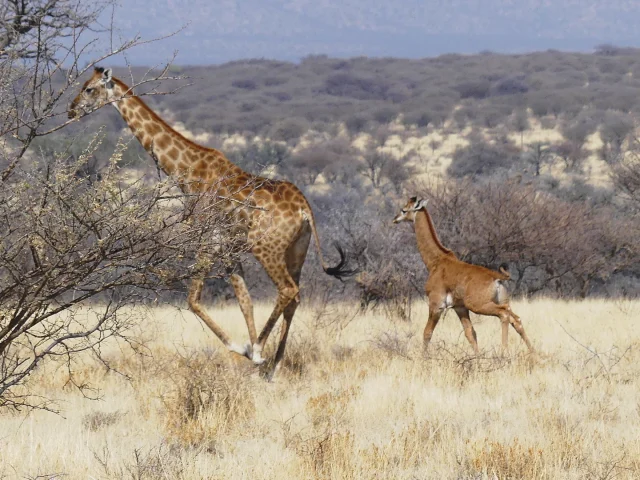
A second giraffe devoid of spots has been discovered in the wild, mere weeks after a similar occurrence at a zoo in Tennessee.
This remarkable finding took place in Namibia, Africa, marking the first-ever spotting of a spotless giraffe in its natural habitat. The other spotless giraffe, christened Kipekee, entered the world at Brights Zoo in Tennessee on July 31.
Typically, giraffes are born with distinct spot patterns, rendering each one unique in its coat design. While the exact cause behind these spotless giraffes remains unknown, scientists speculate that genetic mutations or recessive genes may be at play.
The unearthing of these two spotless giraffes is an exceedingly rare occurrence, prompting the scientific community to fervently seek a deeper understanding of their existence. The insight gained from these giraffes could prove invaluable for unravelling the genetic intricacies governing giraffes and how their coat patterns have evolved over time.
This discovery arrives at a critical juncture when giraffes confront a slew of pressing threats, including habitat degradation, rampant poaching, and the pervasive impact of climate change. Alarming statistics from the International Union for Conservation of Nature (IUCN) reveal that seven out of the nine giraffe subspecies currently face vulnerability, endangerment, or critical endangerment.
In light of these sobering facts, the identification of the two spotless giraffes serves as a poignant reminder of the paramount importance of giraffe conservation. With a dwindling wild population estimated at a mere 117,000 individuals, safeguarding these majestic creatures has assumed an unparalleled urgency.
What implications does this hold for giraffe conservation?
The revelation of these two spotless giraffes represents a monumental milestone in the realm of giraffe conservation. It promises to bestow valuable insights into the genetic makeup of giraffes and the evolutionary pathways of their coat patterns. This newfound knowledge has the potential to fuel the development of innovative strategies to protect and conserve giraffes effectively.
Moreover, the emergence of spotless giraffes underscores the perilous predicament faced by their species. Habitat loss, the relentless spectre of poaching, and the looming spectre of climate change pose existential threats to giraffe populations. As these perils loom larger on the horizon, it becomes increasingly imperative to take proactive measures to shield giraffes from harm.
A series of concrete actions can contribute significantly to giraffe conservation:
- Preserving Giraffe Habitat: Ensuring the preservation and restoration of giraffe habitats is paramount. This involves safeguarding their natural environments from encroachment and degradation.
- Combatting Poaching: Vigorous efforts must be directed towards curbing the illegal hunting and trade of giraffe parts. Enhanced law enforcement and penalties can be instrumental in deterring poachers.
- Raising Awareness: Public awareness campaigns can play a pivotal role in garnering support for giraffe conservation. Educating communities and individuals about the plight of giraffes can foster a sense of responsibility and drive.
- Supporting Conservation Organizations: Various organizations are dedicated to the protection of giraffes and their habitats. Contributing to these initiatives through donations or volunteer work can make a tangible difference.
By galvanizing concerted action on these fronts, we can fortify the prospects of these wondrous animals, ensuring they continue to grace our world with their towering elegance. – Namibia Daily News